



Summary:
Calgary winters are hard on indoor air. Cold outdoor air holds very little moisture, chinooks bring in warm but very dry wind, and once the furnace is running every day, indoor humidity can drop low enough to cause dry skin, static shocks, irritated sinuses and gaps in hardwood floors. A whole-home humidifier adds moisture through your furnace and ductwork so every room stays in a healthier range. This guide explains why Calgary homes dry out, what humidity level to aim for, how whole-home humidifiers work, and how to decide whether one makes sense for your home.
It comes down to how air holds moisture. Cold air can hold far less water vapour than warm air. When frigid outdoor air leaks into your home and your furnace warms it up, the amount of moisture in that air stays the same while its capacity to hold moisture climbs. The result is indoor air with a very low relative humidity, often well below what feels comfortable.
Calgary has an extra factor. Chinooks are warm, very dry winds that come down the eastern slopes of the Rockies, and Environment Canada has estimated that Calgary sees roughly 25 chinook days over a typical December-to-February winter. They are a welcome break from the cold, but they do nothing for indoor moisture levels.
Add long furnace run times and an older home with a few air leaks, and it is easy to see why so many Calgary homeowners notice the dryness from November through March.
Low humidity shows up in your body, your home and your belongings. Common signs include:
The most reliable way to know is to measure. An inexpensive digital hygrometer, available at most hardware stores, shows your home's relative humidity at a glance. Many smart thermostats display it as well.
Health Canada recommends keeping indoor relative humidity between 30% and 50% to help control moisture and mould. In winter, Calgary homes usually do best toward the lower end of that range.
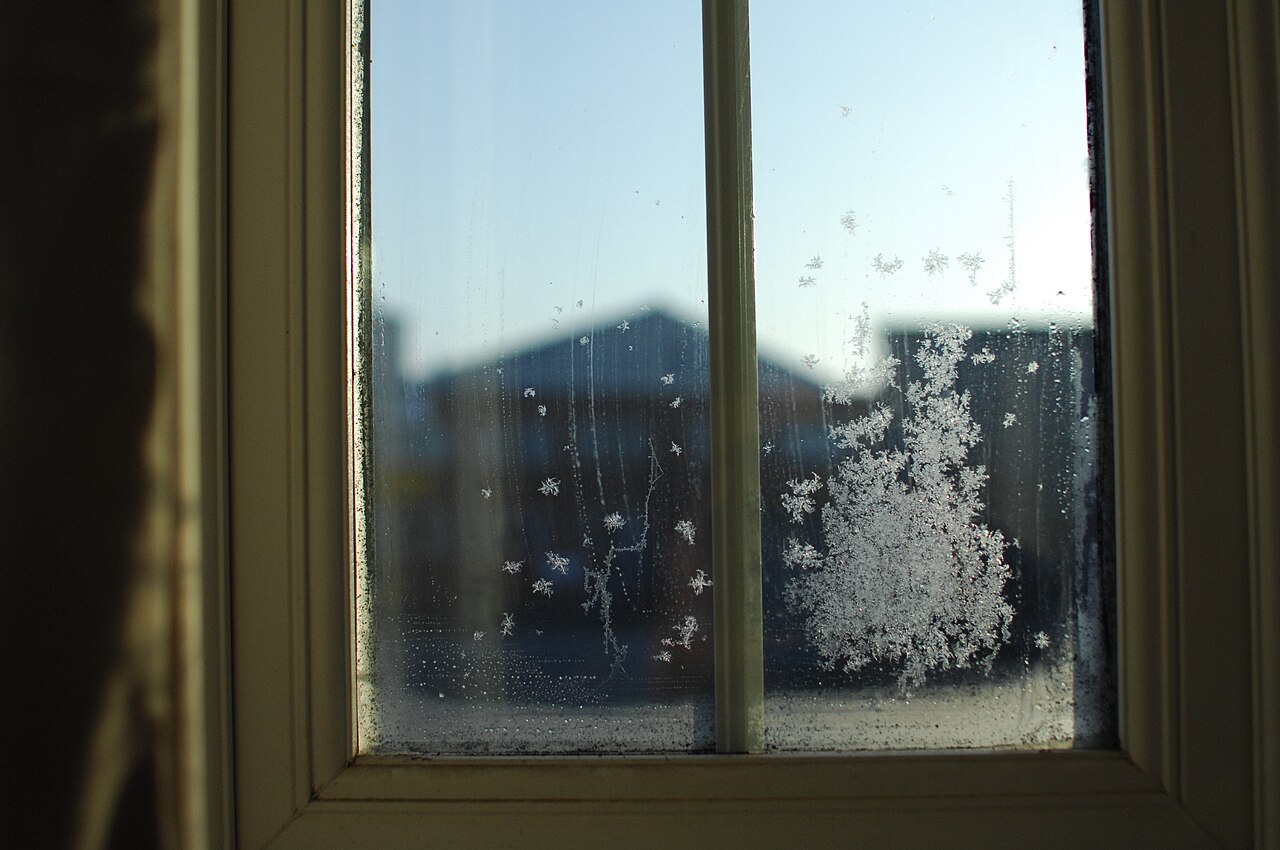
The reason is your windows. When it is very cold outside, the inside surface of the glass gets cold too, and moist indoor air condenses on it. Canada Mortgage and Housing Corporation (CMHC) notes that in very cold weather, a level of 30% or lower may be needed to prevent window condensation, and that humidity should not exceed 50% during the heating season. Newer, energy-efficient windows can handle a slightly higher level before condensation appears.
A practical rule of thumb: if you see water or frost collecting on the inside of your windows, the humidity is too high for the current outdoor temperature, and it is time to turn it down. Health Canada's guide to addressing moisture and mould indoors is a helpful reference for finding that balance.
A whole-home humidifier, sometimes called a furnace humidifier, is mounted on or near your furnace and connected to your ductwork and water supply. As the furnace circulates warm air, the humidifier adds moisture to it, and the ductwork carries that moisture to every room. A humidistat, or a compatible thermostat, monitors the humidity and turns the system on and off to hold your setting.
There are three common types:
Many modern controls also use an outdoor temperature sensor to lower the humidity setting automatically as temperatures drop, which helps prevent window condensation during a cold snap.
Portable humidifiers can help in a single bedroom, but they have real limitations for a whole house. They only treat the room they are in, need refilling every day or two, and require regular cleaning. Health Canada points out that with cool-mist units, bacteria can collect and multiply in water left sitting from one use to the next, which is why it recommends emptying leftover water and cleaning and disinfecting the reservoir regularly. You can read more on Health Canada's cool-mist humidifiers page.
A whole-home system is connected to your water line, so there is nothing to refill, and it delivers balanced humidity throughout the house rather than in one room. It does need annual maintenance, but it is a once-a-year task instead of a daily chore.
A whole-home humidifier tends to make the most sense if:
It may not be the right fit if your home already has window condensation or a moisture problem. Some newer, very airtight Calgary homes hold onto moisture from cooking, showers and breathing, and adding more can make things worse. In those homes, the better answer is often improving ventilation, not humidification. If you are seeing condensation, musty smells or mould, our post on how to know when you need a dehumidifier covers the signs of too much moisture.
Homes heated by boilers or in-floor systems without ductwork cannot use a furnace-mounted humidifier, although a steam unit with its own dispersal may be an option.
Calgary's hard water is the biggest factor in humidifier upkeep. As water evaporates, the minerals stay behind and build up as scale on the water panel or inside a steam canister, which reduces output over time.
A good time to have the humidifier checked is during your annual furnace maintenance visit, since the two systems work together.
It can if it is set too high or not maintained. Health Canada recommends keeping indoor humidity between 30% and 50%, and in very cold Calgary weather, the lower end of that range is safer. If you see condensation on windows, lower the setting. A properly sized and controlled system, maintained once a year, should not create a mould problem.
Humid air tends to feel warmer than dry air at the same temperature, so some people find they are comfortable with the thermostat set a little lower. Any savings depend on your home and habits, so it is best to think of comfort as the main benefit and lower heating costs as a possible bonus.
In most cases, yes. A whole-home humidifier can usually be added to an existing forced-air furnace without replacing it, as long as there is room on the ductwork and access to a water line and drain. A technician can confirm which type suits your furnace and home size.
Lower than usual. When temperatures drop well below freezing, many homes need to sit around 30% or a bit lower to keep windows clear. Watch your windows: if condensation or frost appears on the inside, turn the humidity down until it clears.
A whole-home humidifier can make your house noticeably more comfortable through a long Calgary winter, but it needs to be the right type, sized properly and set up for your windows and furnace. ERM Plumbing & Heating can look at your heating system, check your home's humidity and explain honestly whether a humidifier makes sense for you.
Our team provides plumbing and heating services across Calgary. Contact ERM to ask about a whole-home humidifier before the coldest stretch of winter arrives.
Add ERM Calgary as a Preferred Google Source to see our updates first!
Dry Calgary winter air? See the ideal indoor humidity and if a whole-home humidifier suits you.
Read More
A heating-season carbon monoxide checklist for Calgary homes, from alarms to vents.
Read More
Plumbing and heating checks before your Thanksgiving trip.
Read More

