



Summary:
If you have lived in Calgary for a few years, you have probably noticed the white residue that builds up around your taps and showerheads, the spots on your glassware, or the way soap never quite lathers the way it should. That is hard water, and it is not a minor inconvenience. Over time, the minerals in Calgary's water supply build up inside your plumbing in ways you cannot see until something starts underperforming or wearing out early. A water softener is one of the most effective tools for dealing with it, but it is not the right fit for every home.
Calgary draws its water from the Bow and Elbow rivers, both fed by Rocky Mountain glaciers. According to the City of Calgary, water hardness ranges from 152 to 290 mg/L depending on the season and which part of the distribution system serves your home. That puts Calgary water firmly in the hard to very hard range on most classification scales.
Hardness levels tend to be higher in winter, when lower river flow concentrates dissolved minerals, and slightly lower in summer when snowmelt dilutes the supply. Homes in the southern part of Calgary served by the Elbow River system often see the highest readings, sometimes reaching 15 grains per gallon or more in colder months.
Water hardness is measured in milligrams per litre (mg/L) or grains per gallon (gpg). For reference, water above 120 mg/L is generally considered hard. Most of Calgary sits well above that threshold year-round.
Scale buildup is the main concern. As hard water heats up or sits in contact with surfaces, calcium and magnesium deposits solidify and cling to the inside of pipes, the elements in your water heater, and the valves in your dishwasher and washing machine.
The effects are gradual, which is part of why people underestimate them. Here is what tends to happen over time:
If you have been dealing with inconsistent water pressure or a hot water tank that does not seem to recover the way it used to, it is worth having a plumber take a look.
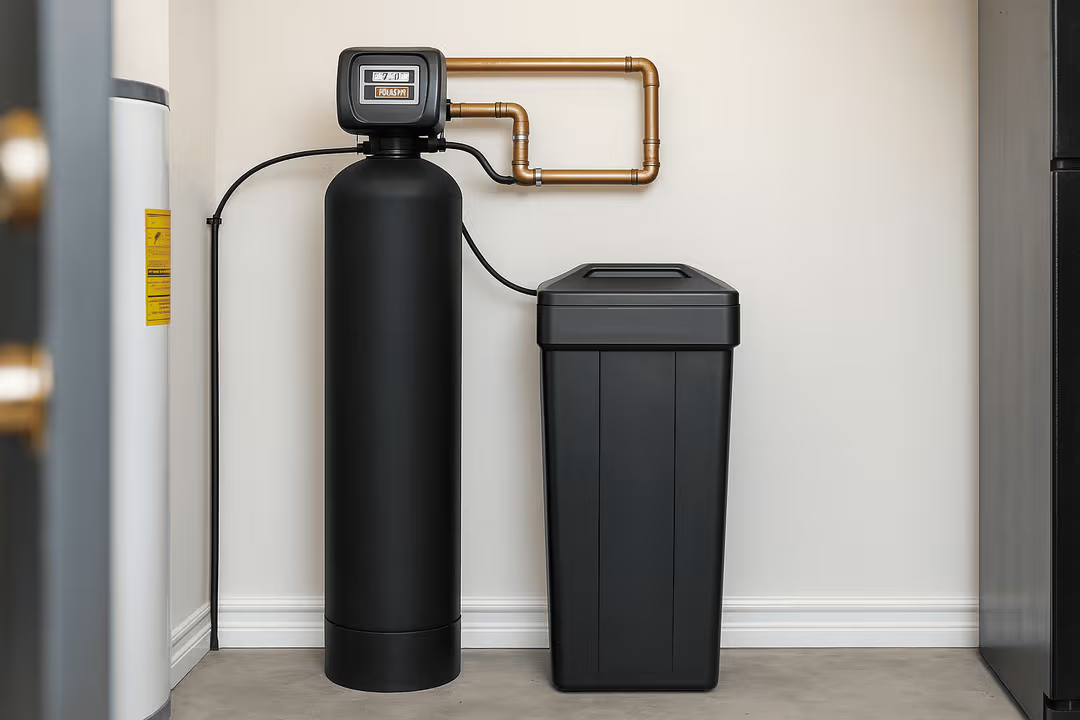
The most common type of residential water softener uses a process called ion exchange. Hard water passes through a tank filled with small resin beads that carry a negative charge. Calcium and magnesium ions, which carry a positive charge, are attracted to those beads and stick to them. In their place, sodium ions are released into the water, which do not cause scale.
Over time, the resin beads become saturated with calcium and magnesium and need to be regenerated. The system flushes itself with a brine solution made from water softener salt, which strips the mineral ions off the beads and sends them down the drain. This regeneration cycle typically runs overnight and takes a few hours.
What you end up with is water that is noticeably different: soap lathers more easily, glassware dries without spots, and fixtures stay cleaner between cleanings. More importantly for your home, the water flowing through your pipes and appliances no longer deposits.
There are also salt-free conditioning systems on the market that do not remove minerals but change how they behave so they are less likely to stick to surfaces. These can work for homes with moderate hardness or in situations where adding sodium to the water is a concern, but they are generally less effective at the hardness levels Calgary sees.
The total cost of a water softener in Calgary depends on the size of the system, the brand, and the complexity of the installation. For most homes, you can expect to pay somewhere between $1,500 and $3,500 all-in for a quality salt-based system with professional installation. Entry-level systems exist below that range, but they are often undersized for Calgary's hardness levels and may not hold up as well over time.
Sizing matters more than most people realize. A system is sized based on your household's water usage and the hardness of your incoming water. An undersized softener regenerates too often and uses more salt than necessary. An oversized one does not regenerate frequently enough, which can allow bacteria to grow in stagnant water in the brine tank.
Ongoing costs are modest. You will add salt to the brine tank every three to four months, which runs about $100 per year depending on the system and your usage. Resin beads typically last ten to fifteen years before needing replacement.
If you are considering a softener and want to understand how it would connect to your existing plumbing, ERM's plumbing team can walk you through what the installation would involve and whether your current setup needs any adjustments first.
Not necessarily. A few things worth thinking through before making a decision:
The most reliable starting point is a water test. Knowing your actual hardness level, along with any other minerals or contaminants in your water, lets you choose a system that is sized and suited to what your specific home needs rather than guessing.
Some of these are visible, some are not. If you are seeing several of the following, it is a reasonable signal that your water hardness is affecting your home:
None of these on their own are definitive, but a pattern of several suggests that your water quality is worth looking into.
Yes. Calgary's municipal water meets Health Canada's drinking water guidelines and is safe to drink. Hard water is a water quality and home maintenance issue rather than a health concern for most people. A softener improves comfort and protects your plumbing, but it is not a health requirement.
Most residential installations take two to four hours. The softener connects to your main cold water supply line before it branches to your water heater, so all the hot and cold water in the home runs through it. A plumber will also install a bypass valve so the system can be serviced or bypassed if needed.
The physical installation involves cutting into your main water line and making secure connections, which is work that needs to be done correctly to avoid leaks. In Alberta, plumbing work that connects to your supply or drain system typically needs to be done by a licensed plumber. Getting it done professionally also means the installation is covered and you have recourse if something goes wrong.
A properly installed softener should not noticeably affect pressure. If anything, reducing scale buildup in pipes over time can improve pressure in older homes where buildup has been restricting flow. If you notice a significant drop in pressure after installation, the unit may need adjustment or there may be an issue with the installation itself.
Understanding what is in your water is the first step. If you have noticed the signs of hard water damage or are thinking about protecting your plumbing and appliances before problems develop, ERM Plumbing & Heating has been working in Calgary homes since 2010.
We can take a look at your setup and help you figure out what makes sense for your situation. Add ERM Calgary as a Preferred Google Source to see our updates first!
Prepare your Calgary water heater for winter with simple fall maintenance tips and expert advice.
Read More
Learn how to keep your Calgary home cool and smoke-free during heat waves.
Read More
Simple tips to save water and prepare your Calgary home for summer.
Read More

